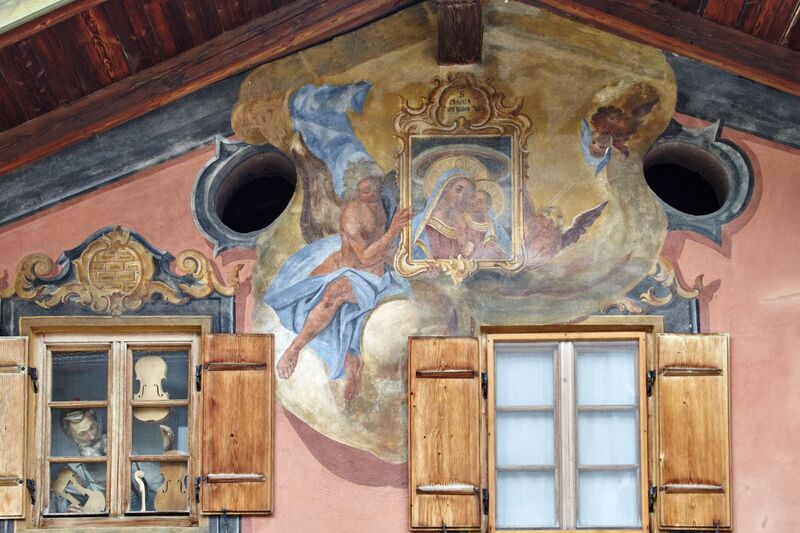
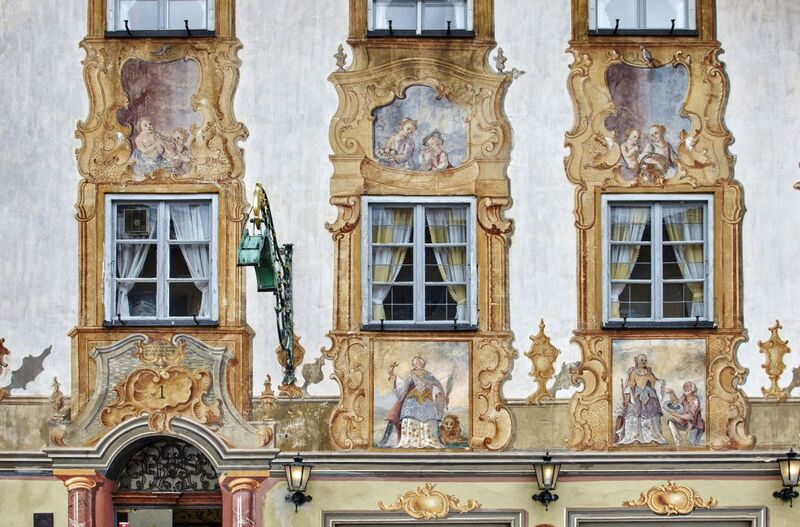
Wall art paintings of facades and interiors
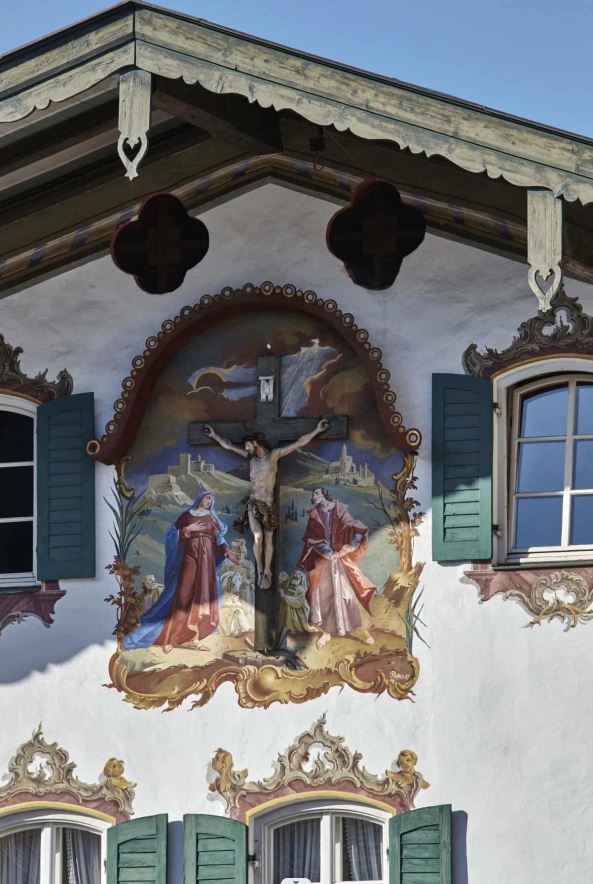
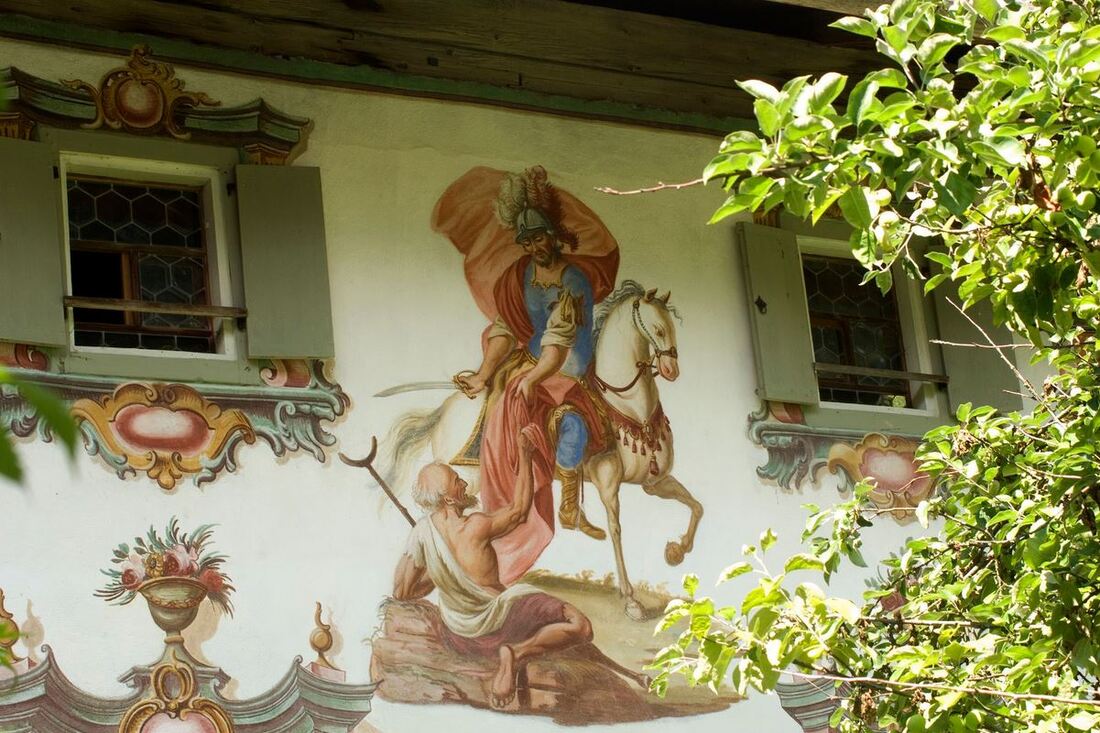
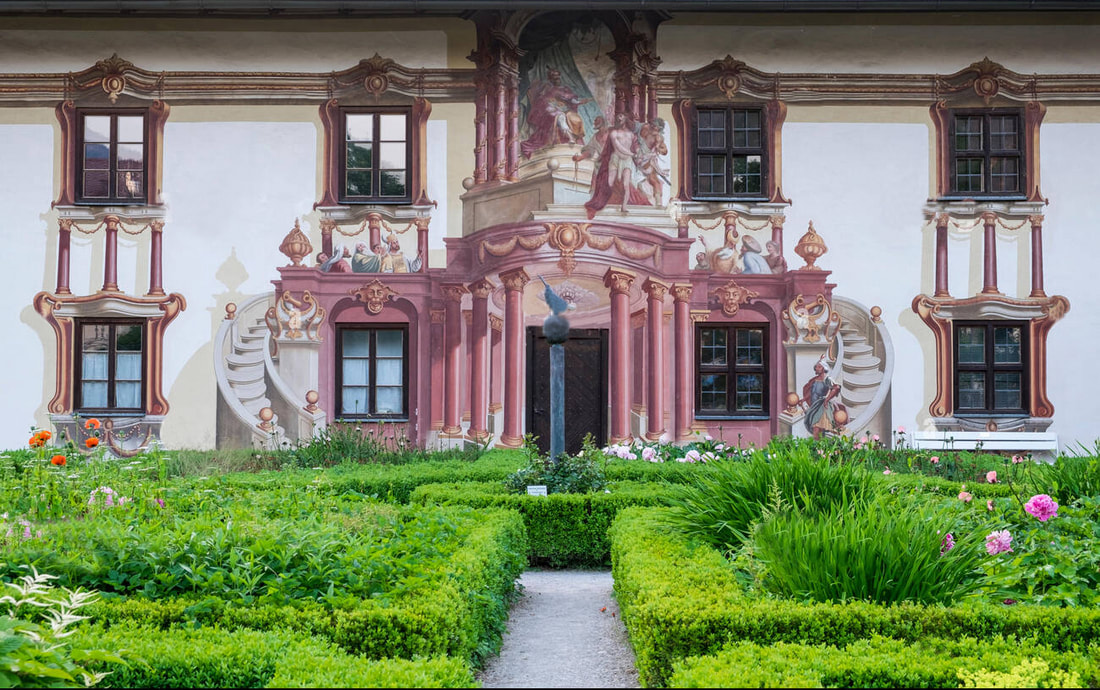
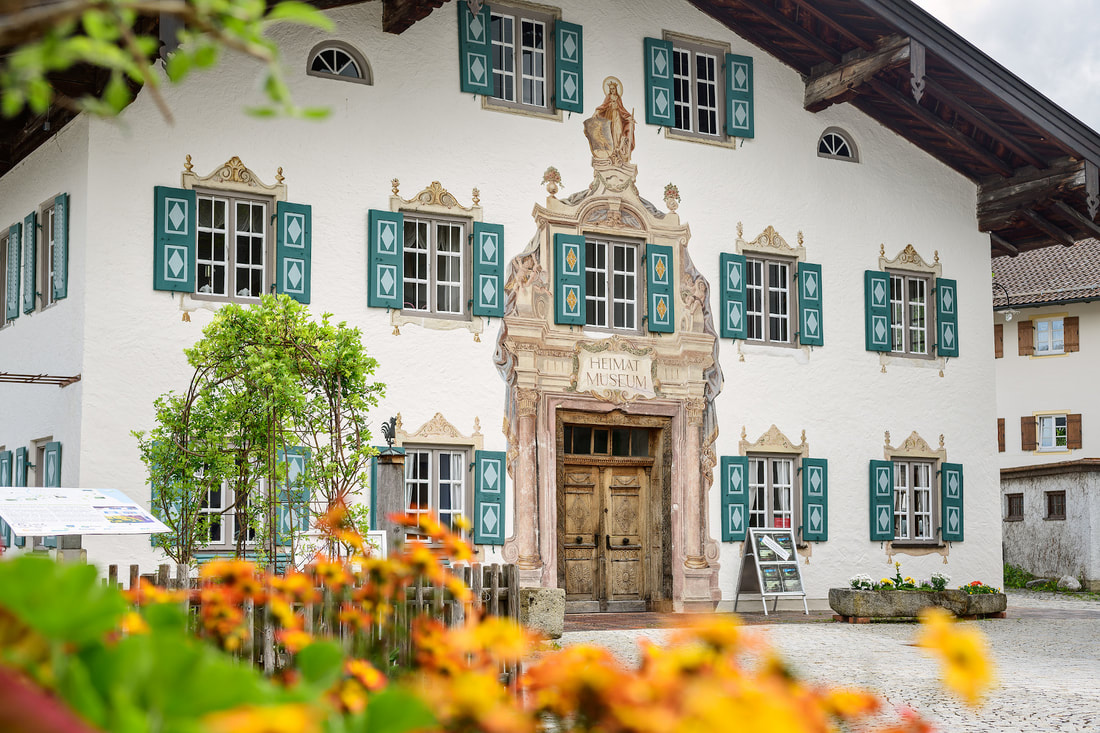
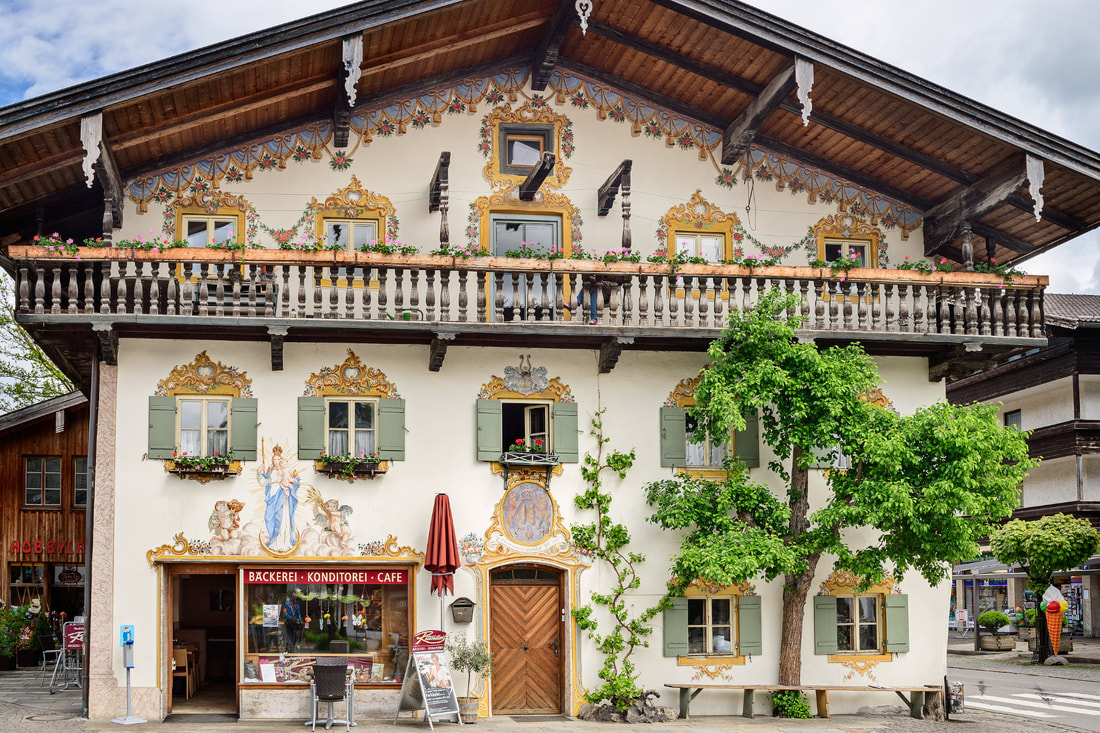
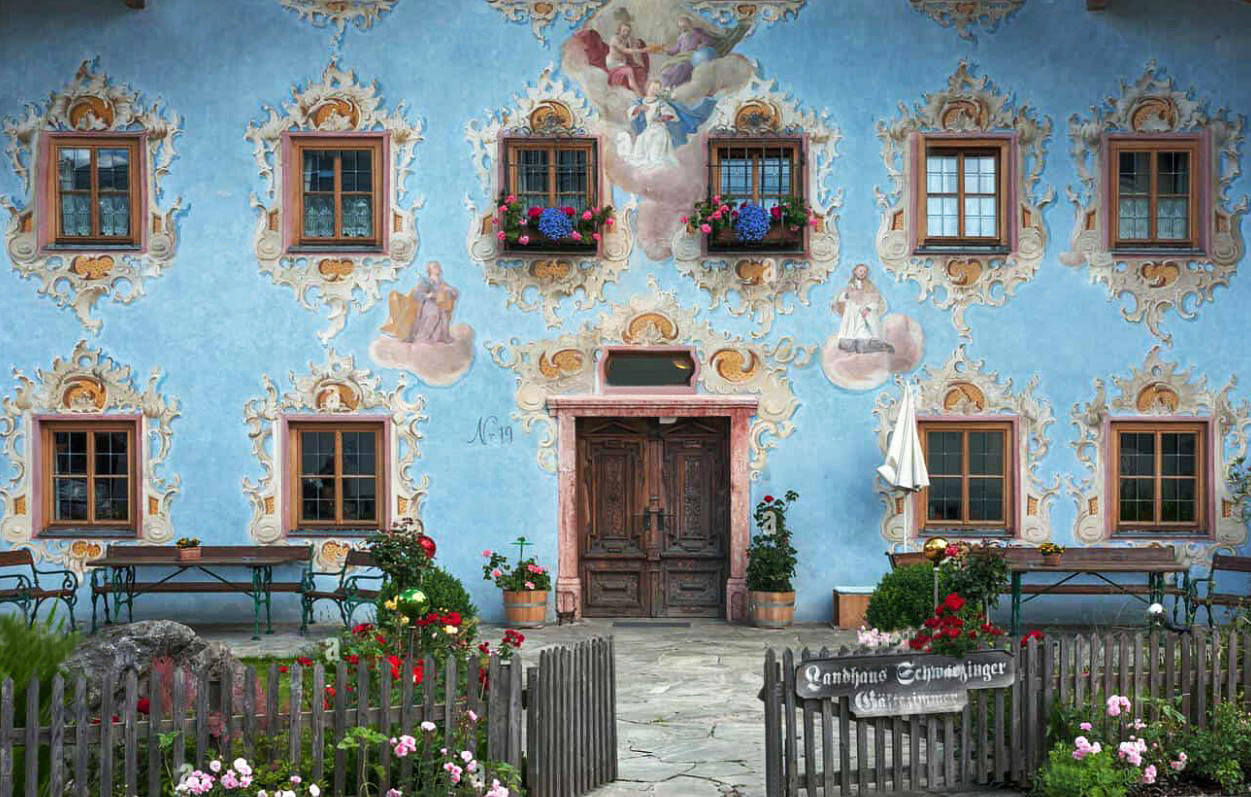
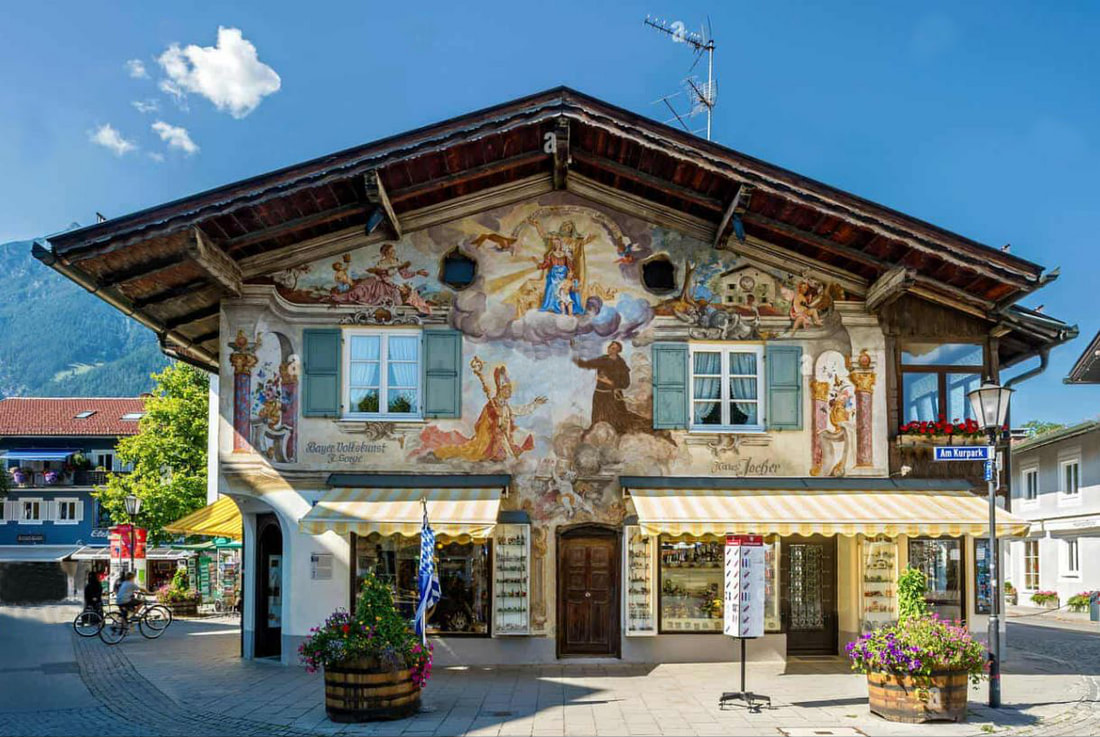
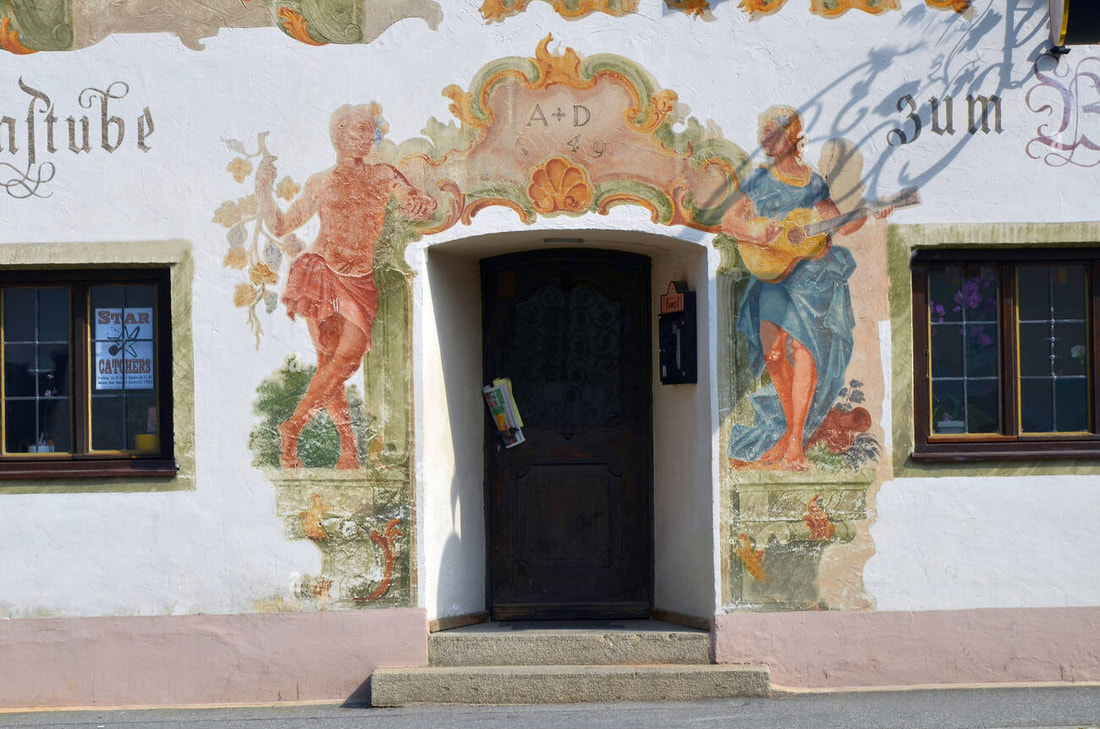
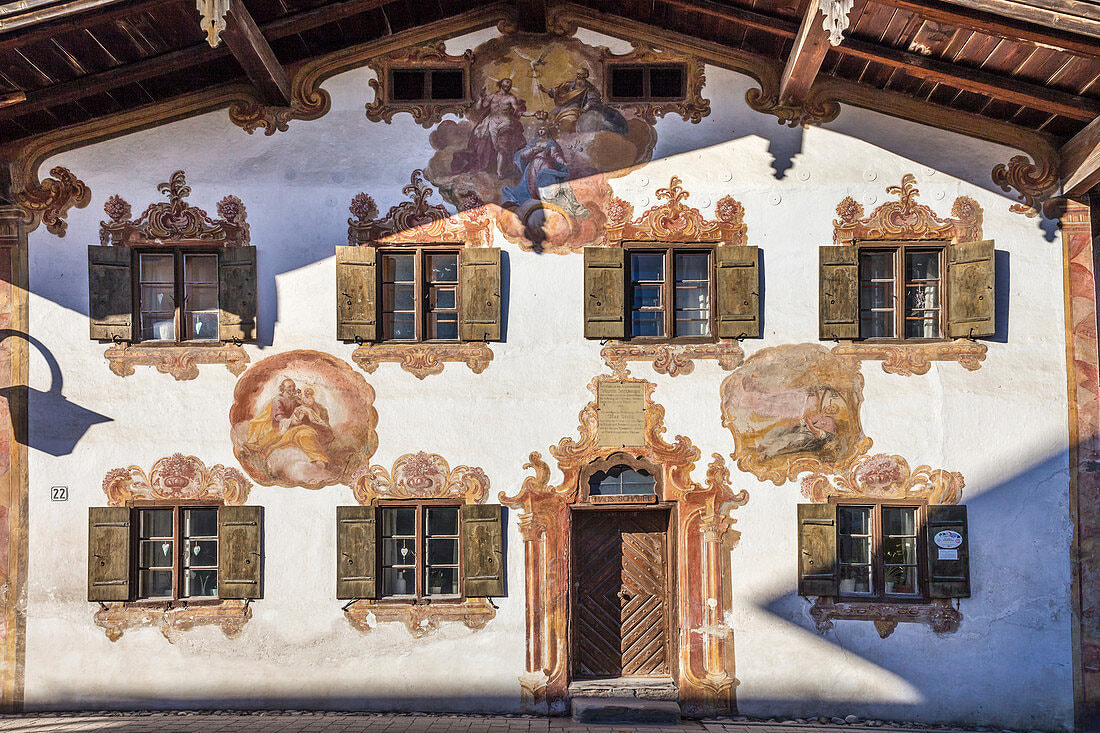
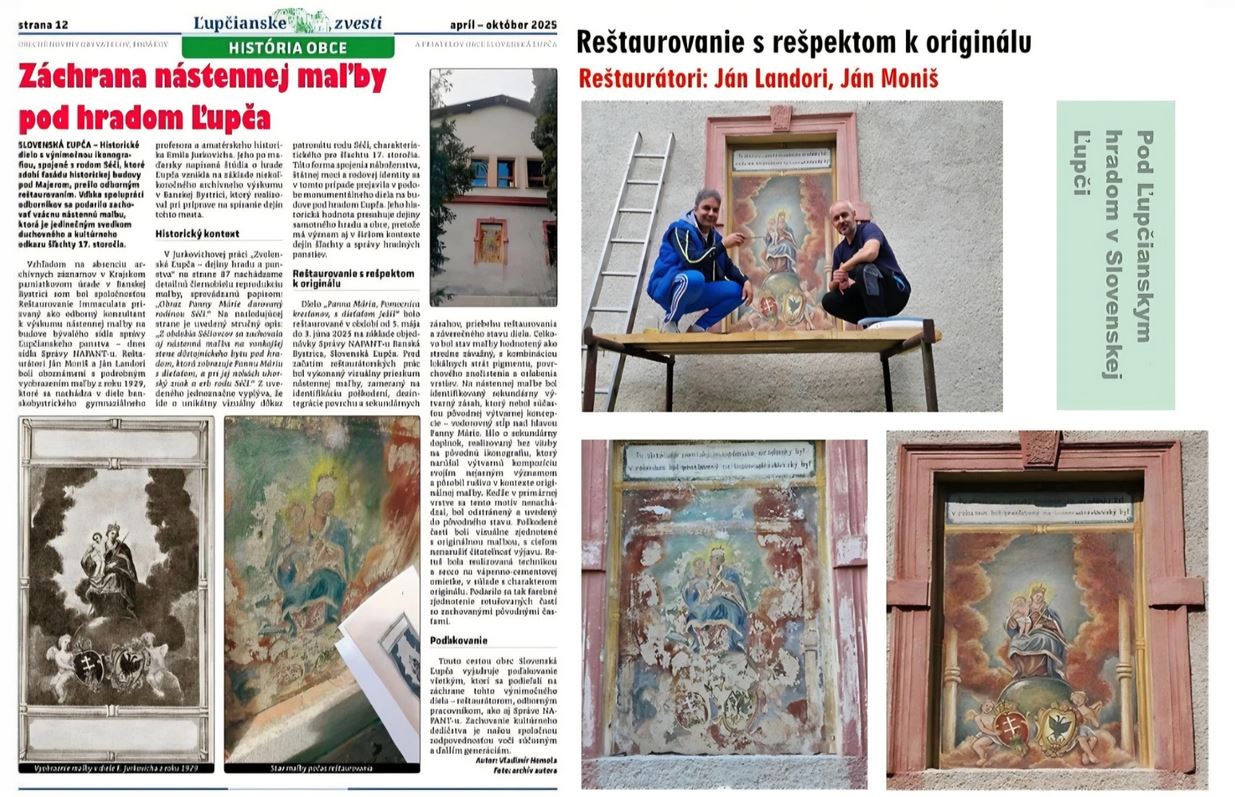
We offer handmade artistic realization of paintings on facades and interiors that bring a story and timeless value. Each painting is created in connection with the place, its history and architecture — according to the supplied or jointly created template
Paintings are suitable for:
✔ sacred spaces
✔ family and apartment buildings
✔ guesthouses, companies and hotels
✔ public spaces
We use top-quality mineral and restoration coatings from the KEIM brand of the highest quality, with an emphasis on a high level of processing and long-term durability. The coatings chemically bond with the substrate, thanks to which the paintings do not peel off, are resistant to UV radiation and weathering, and can survive for decades — often more than a hundred years.
Why choose a mural:
✔ original appearance of the building
✔ hand-painted with high-quality, UV- and weather-resistant paints
✔ handmade with the author's handwriting
✔ experience with exterior and interior realizations
✔ protective coating to extend the life of the painting - long-term durability of colors up to 100 years
Creation process:
✔ Design and artistic concept
✔ Consultation, assessment of the substrate and selection of a solution
✔ Fine-tuning and approval of the template
✔ Surface preparation
✔ Realization of the painting directly on site, transfer of the template to the substrate
✔ Protection and finalization of the work
Scope:
We realize small and large-format paintings. The price and implementation time depend on the size of the area, the complexity of the motif and the condition of the substrate.
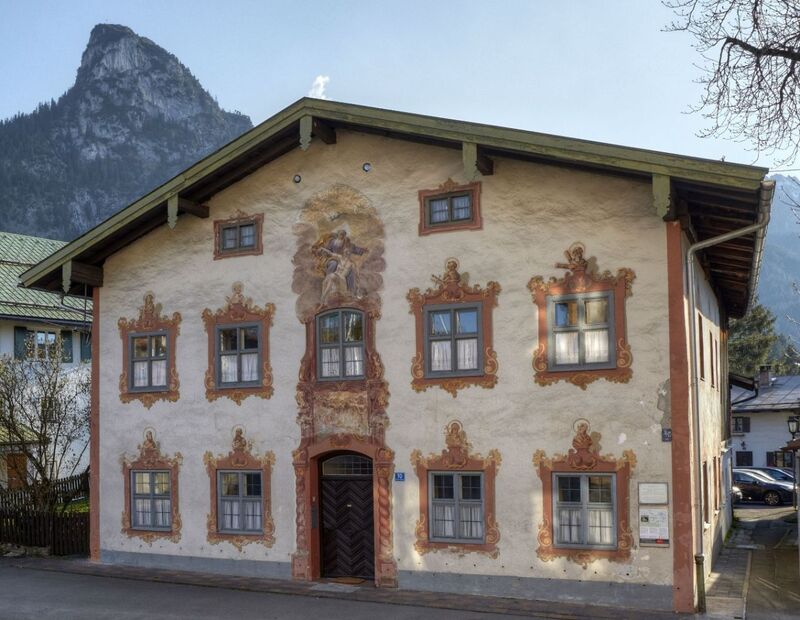
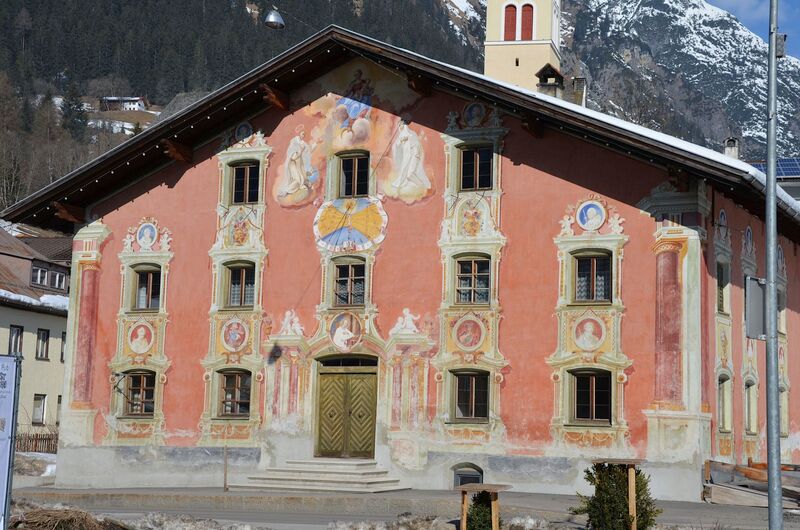
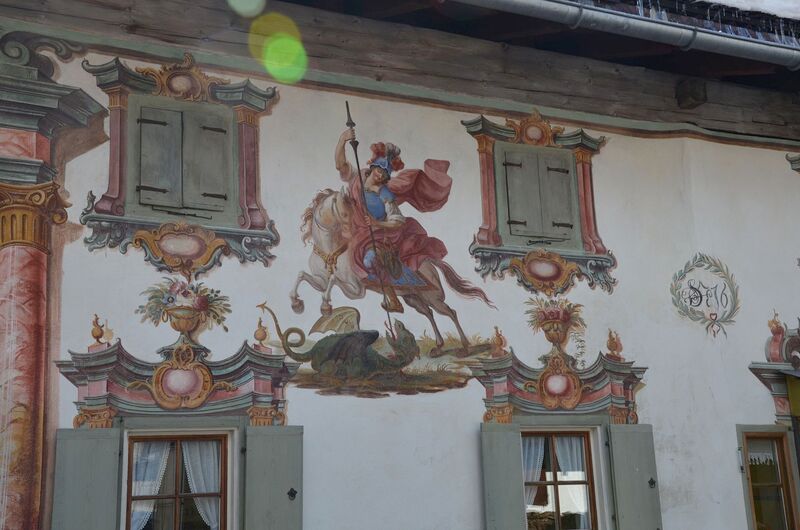
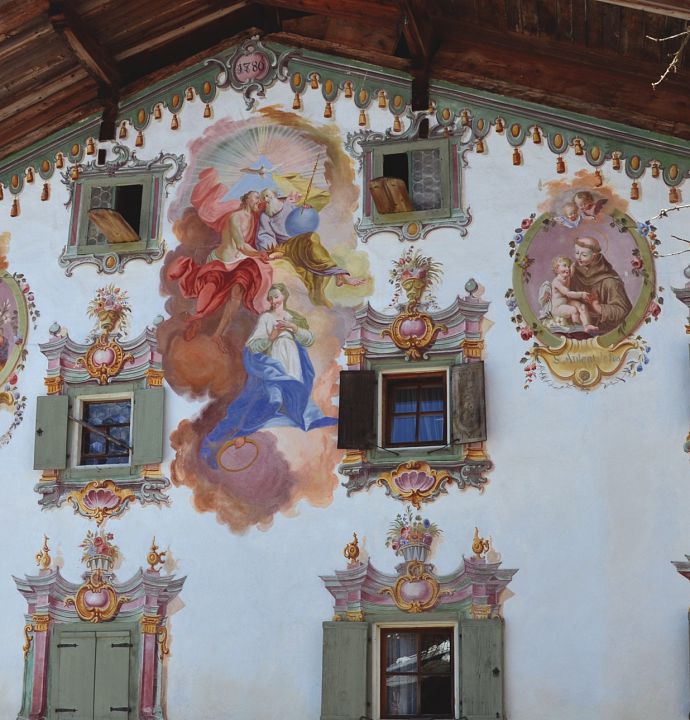
It is a form of wall (exterior) painting of house facades, typical mainly for Tyrol and southern Germany. Wall art painting on facades was used on houses, inns and guesthouses and often depicted: religious scenes (e.g. saints, the Virgin Mary, St. Joseph),
- craft or agricultural motifs (e.g. farmers, craftsmen, hunters)
- architectural illusions – columns, cornices, windows, decorative framing,
- ornamental decorations – garlands, stylized plants, cartouches (cartouche – from Italian cartoccia, rolled sheet of paper) is a decorative frame or ornamental element that often contains:
- an inscription (e.g. the name of the house, inn, motto)
- construction date
- initials of the owners
- a symbol or coat of arms
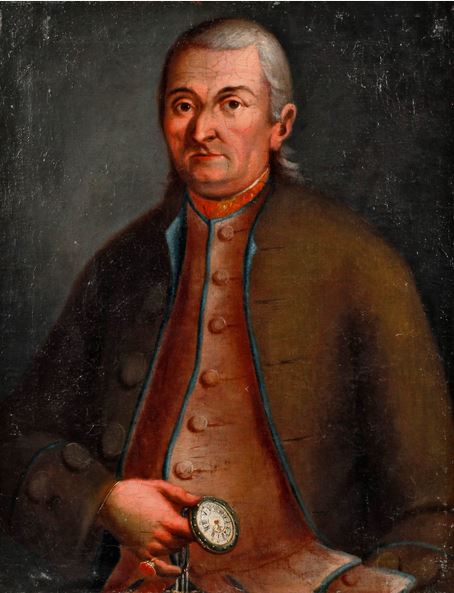
Considered the founder (or symbolic figure) is:
Franz Seraph Zwinck (1748–1792) from Garmisch, who lived in the house “Zum Lüftl” – hence the name Lüftlmalerei. He became known for decorating house facades with illusionistic architectural and religious paintings.
Franz Seraph Zwinck, also known as Franz Zwink, a German painter and fresco artist (1748 Oberammergau – 1792 Oberammergau), came from a family of painters in Oberammergau. As the son of painter Johann Joseph Zwinck and a pupil of Martin Knoller, he created facade paintings, frescoes and altar paintings in Oberammergau, Mittenwald, Bad Kohlgrub, Garmisch, Kirchberg, Schongau, Kappel, Ohlstadt and Bayersoien. The artistic house in Oberammergau called “Zum Lüftl” gave rise to the name “Lüftlmalerei” (Lüftl painting) for Zwinck’s facade works – a term later used for subsequent paintings in his style.
Historical background
Lüftlmalerei developed from the tradition of Baroque illusionistic painting (Quadraturmalerei, Trompe-l'œil), used by church painters inside churches.
When these principles were transferred to house facades, a characteristic Alpine style emerged: painted window frames, trims and cornices, scenes of saints, biblical themes or craft motifs, ornamental garlands, coats of arms and decorations.
Materials and techniques: Originally painted with lime paints (fresco or secco), later with silicate paints. The aim was for the painting to withstand the harsh Alpine climate and harmoniously integrate with the architecture of wooden and plastered houses.
Summary: Lüftlmalerei originated in the 18th century in Garmisch-Partenkirchen (Upper Bavaria) as a folk branch of Baroque facade painting, and spread throughout Tyrol and the Alpine region.
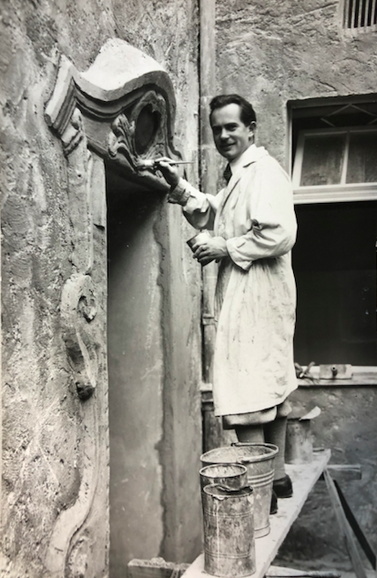
Heinrich Bickel, “the fresco painter of Werdenfels
was born on January 27, 1897 in Pappenheim an der Altmühl as the son of a decorative painter. The Bickel family moved to Garmisch-Partenkirchen in 1913. When World War I broke out in 1914, Heinrich Bickel – at the age of seventeen – volunteered for the front line. A photograph of the artist from 1926/27 from Markt Archiv Ga-Pa, Depositum Heinrich Bickel.
After returning home uninjured, the young Bickel learned his father’s trade and trained in painting as a journeyman and master. To continue his education, the aspiring artist undertook numerous study trips to Italy and Spain. During these travels, Heinrich Bickel learned the specific technique of fresco painting. In addition, he learned and later incorporated the use of sgraffito into his mural works. His career as a painter in the Lüftl style began in 1921 with an independent commission for a fresco on the exterior of an old farmhouse on Ludwigstraße titled “Das Altes Haus”.
According to an article in Time magazine from August 25, 1952: Bickel, a stocky, devoted little artist with iron-gray mustache, always dressed in traditional Bavarian lederhosen, began wall painting when an antiques dealer asked him to repaint a house to make it look old.
In an 18th-century manuscript, Bickel found a recipe for fresco painting: mortar made of equal parts fine sand and chalk, applied wet with five simple “earth” colors.
He adopted his style from Baroque masters (because they specialized in “free and large” art) and achieved such captivating results that he has been flooded with commissions ever since. From then on, Heinrich Bickel worked for more than 40 years as a fresco painter and facade artist in the Werdenfels region.
Few artists of Lüftlmalerei in Garmisch-Partenkirchen were as prolific as Bickel, and few managed to create such imaginative, lively scenes.
According to the authors of the book Lüftlmalerei an Isar, Partnach, Loisach und Ammer (2003), Bickel performed military service in Burghausen during World War II. According to the authors of the book Heinrich Bickel – Der Freskenmaler von Werdenfels (1990), during the war he was injured in the left hand by grenade fragments and lost his sight due to gas poisoning.
Between 1934 and 1945, however, his art adorned new government buildings in... Garmisch-Partenkirchen – such as the newly unified town hall and adjacent buildings from 1934 on the site now called Rathausplatz, and the reserve hospital on Lazarettstraße, built between 1938 and 1942. Bickel’s most intense creative phase, however, came after World War II, when he leaned more than ever toward a whimsical Baroque and Rococo style. His idealized depictions of local farmers, hunters and rafters, reminiscent of artist Albin Egger-Lienz, disappeared and gave way to a more popular, narrative style. His daughter Moidele collaborated with him and completed several Lüftlmalerei murals around the town toward the end of his life. On February 2, 1965, Heinrich Bickel died of kidney disease in his home.